Launch offer — valid today only

📄 Digital book in PDF · read it on your phone or print it

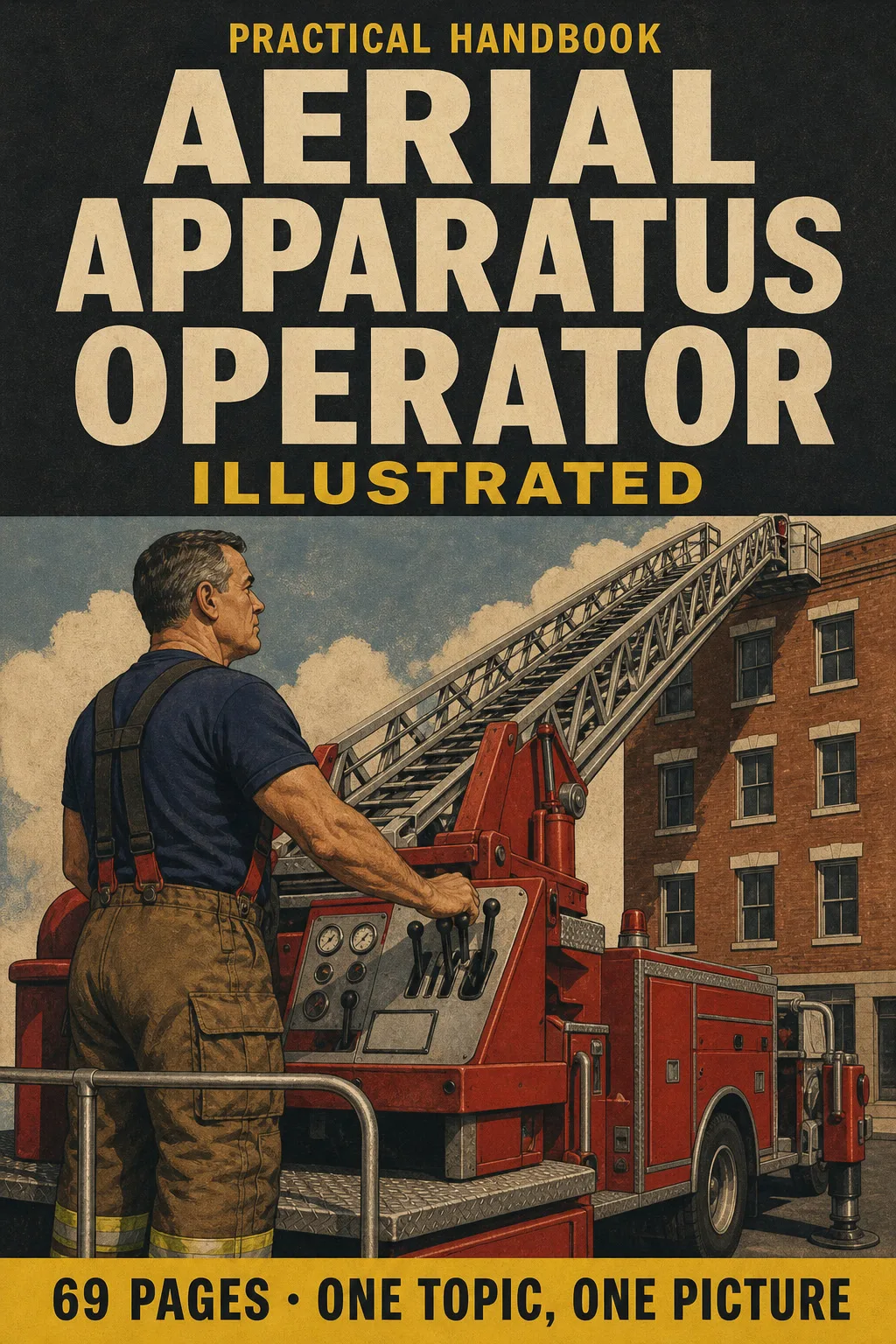
Aerial Apparatus Operator Illustrated: Spot, Stabilize and Raise the Ladder, Every Step in Drawings From Spotting the Truck to Stowing the Ladder

Rear-mount and tiller aerials, spotting the truck, the collapse zone, stabilizers and cribbing, raise-rotate-extend, load charts, elevated master streams and tiller driving. Every topic gets its own page: the drawing first, then what you need to remember. 69 illustrated pages.

START STUDYING THIS WAY

🔒 Secure checkout · PDF by email · 30-day guarantee

Every topic, its own pageEach setup step drawn, with the explanation right beside it
69 illustrated pages9 parts, from the aerial operator's job to the numbers to know cold
Up-to-date sourcesNFPA 1010, NFPA 1900 and OSHA 29 CFR 1910.333
PDF by emailFormat

Look Inside the Book

Every page has one big drawing and a box with the steps and numbers you need to know:

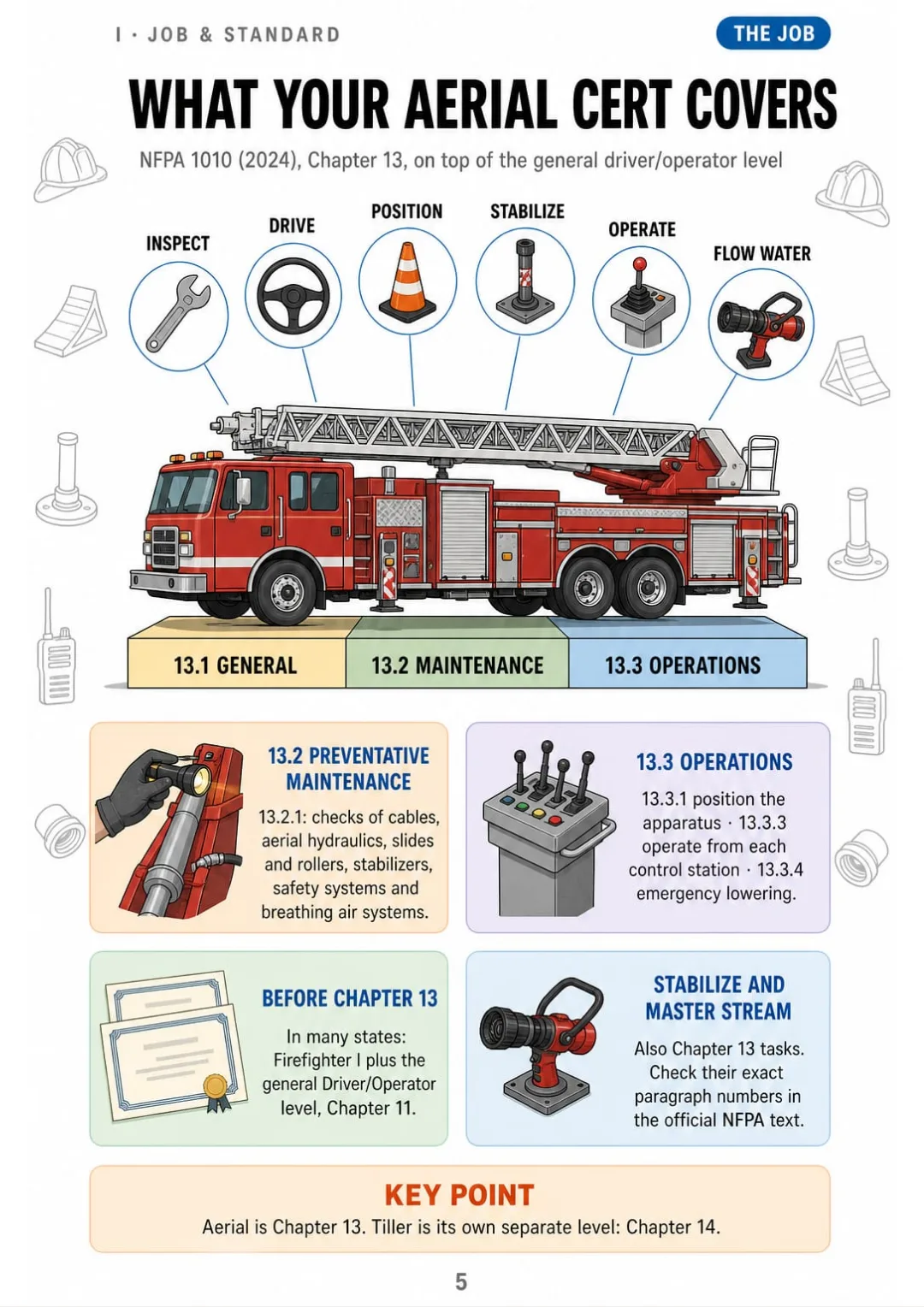
NFPA 1010 Chapter 13: 13.1 General, 13.2 Preventative Maintenance, 13.3 Operations
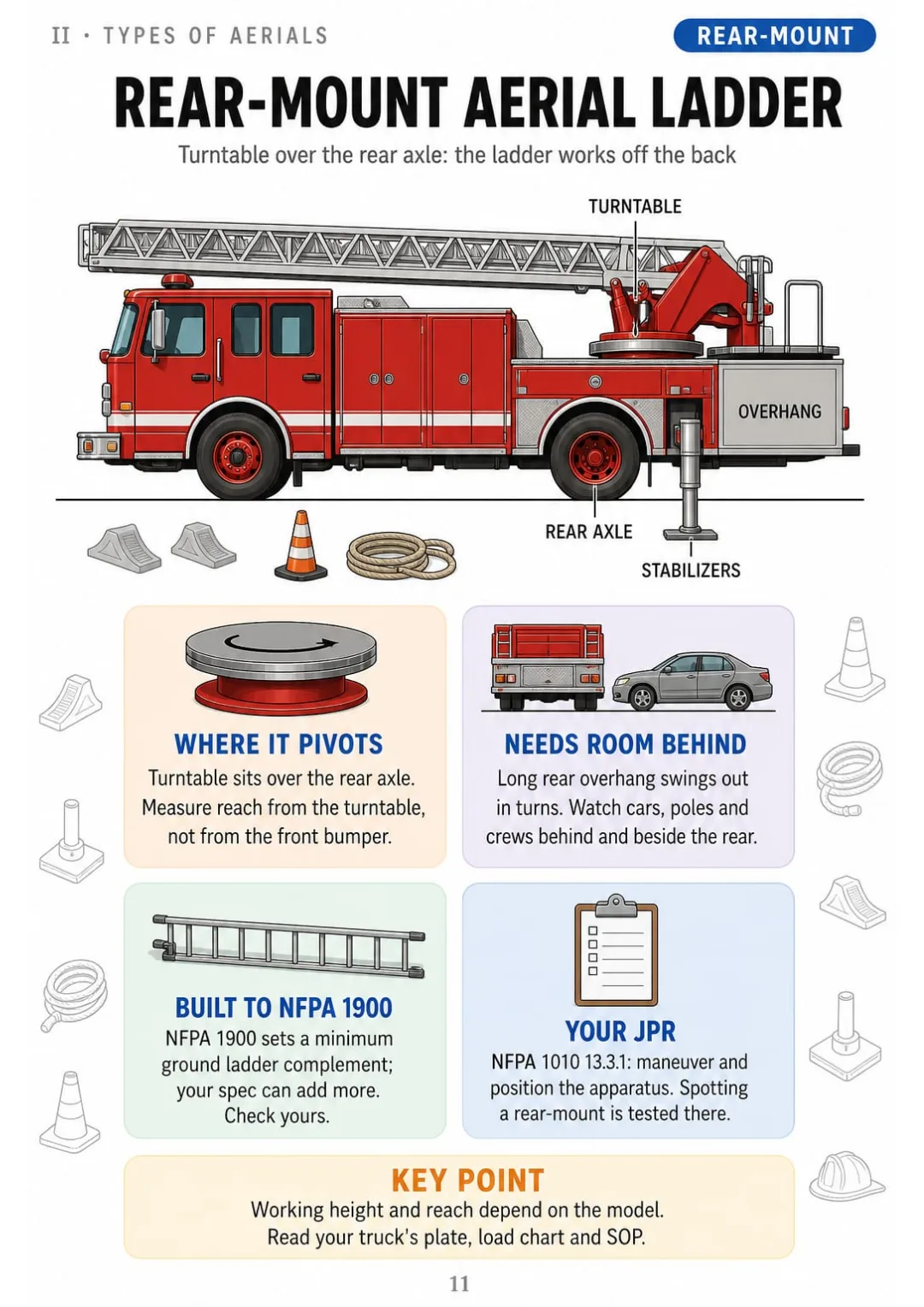
Turntable over the rear axle, overhang past the bumper: reach is measured from the turntable.
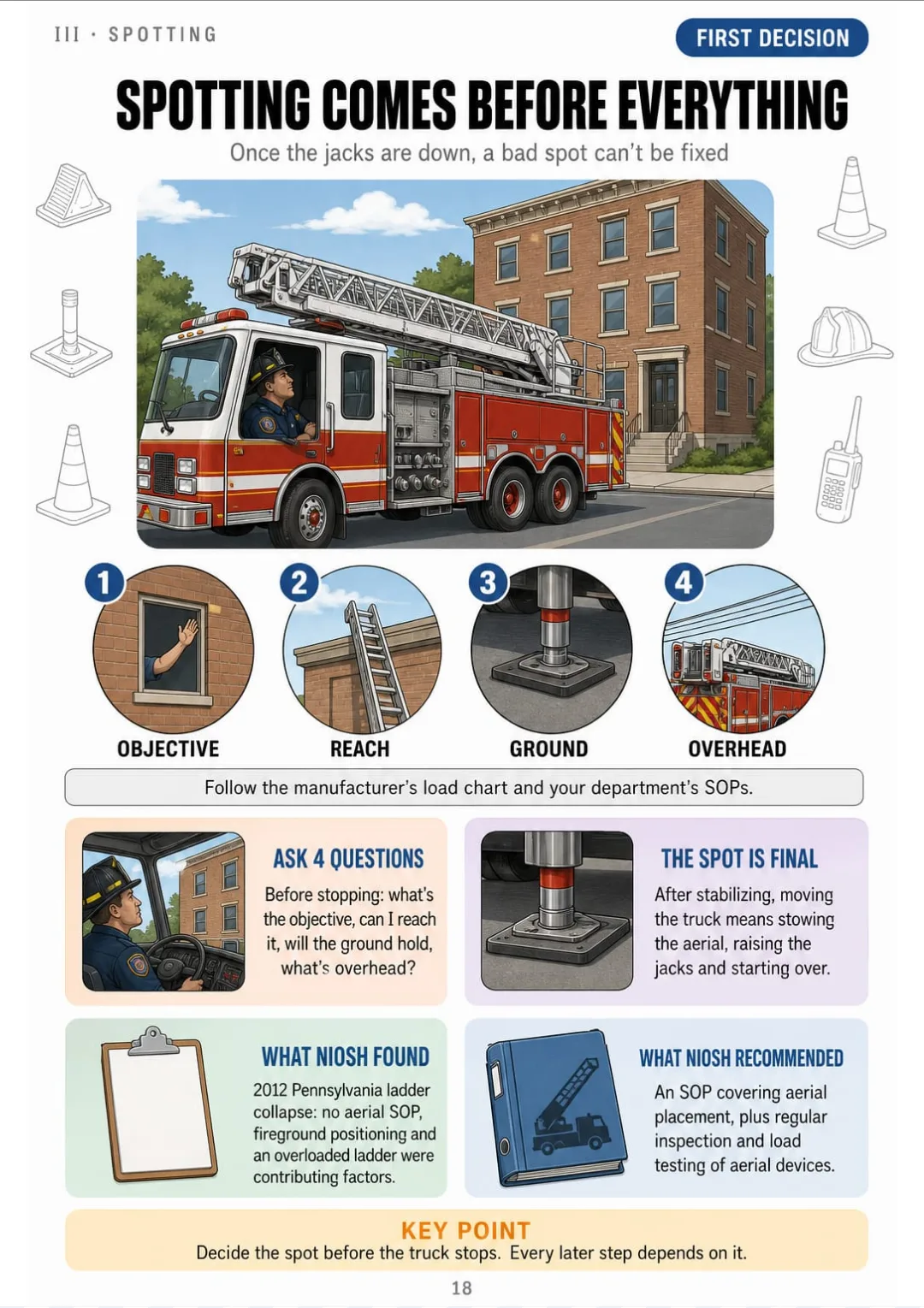
Objective, reach, ground, overhead: the 4 questions to ask before you stop the truck.
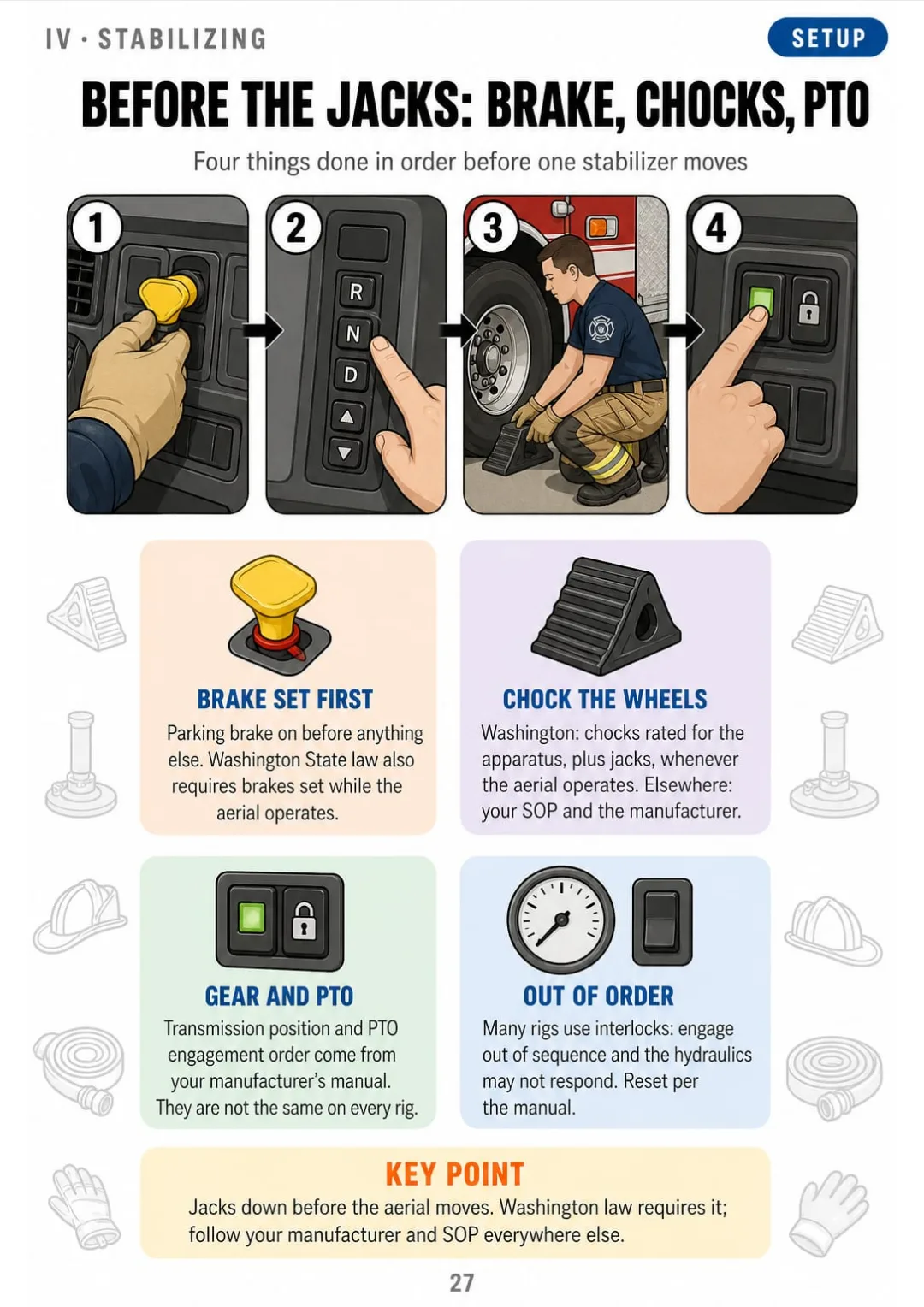
Parking brake, gear, chocks and PTO, in the order your rig's manual sets.
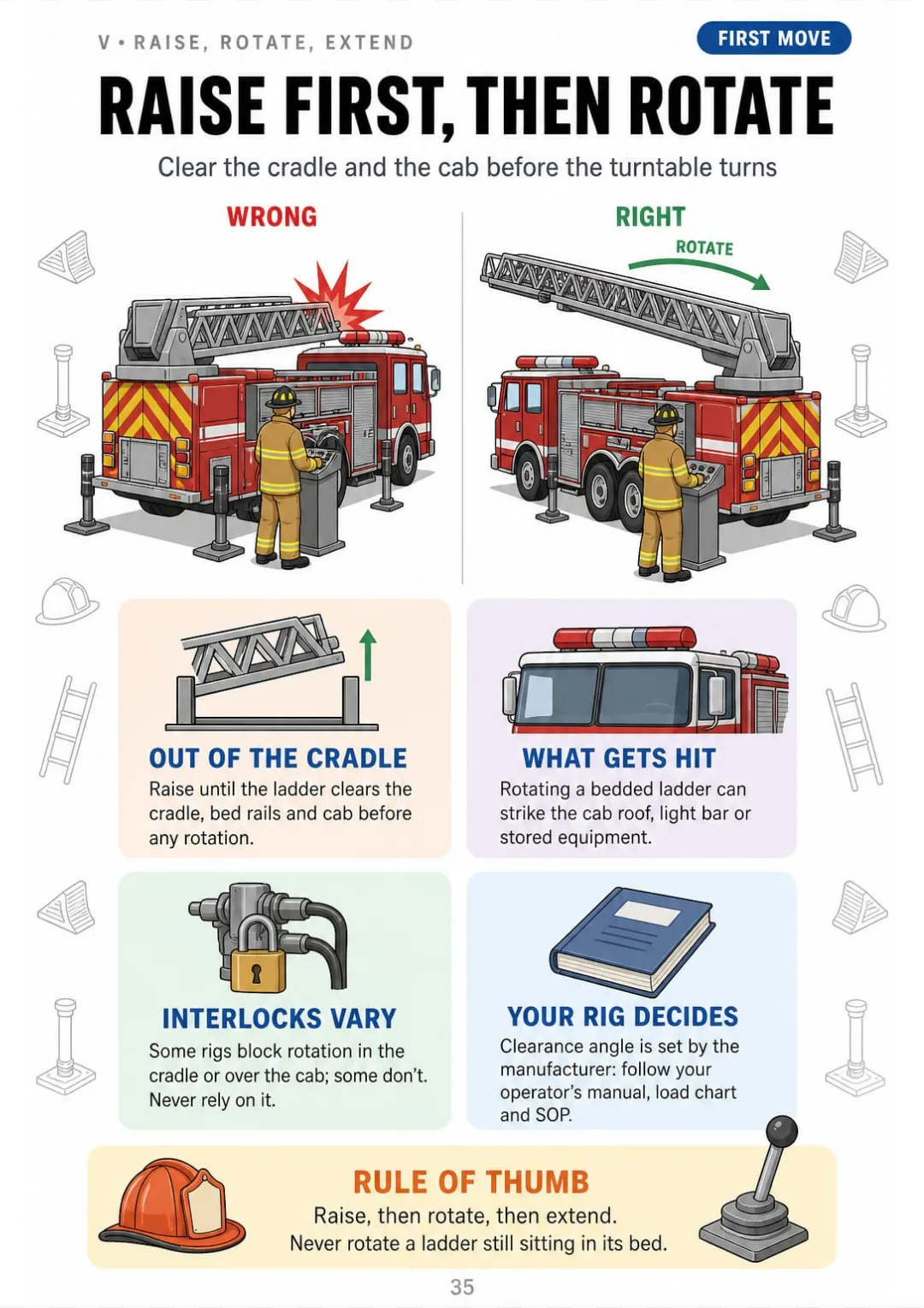
Raise → rotate → extend: what you hit if you rotate a bedded ladder
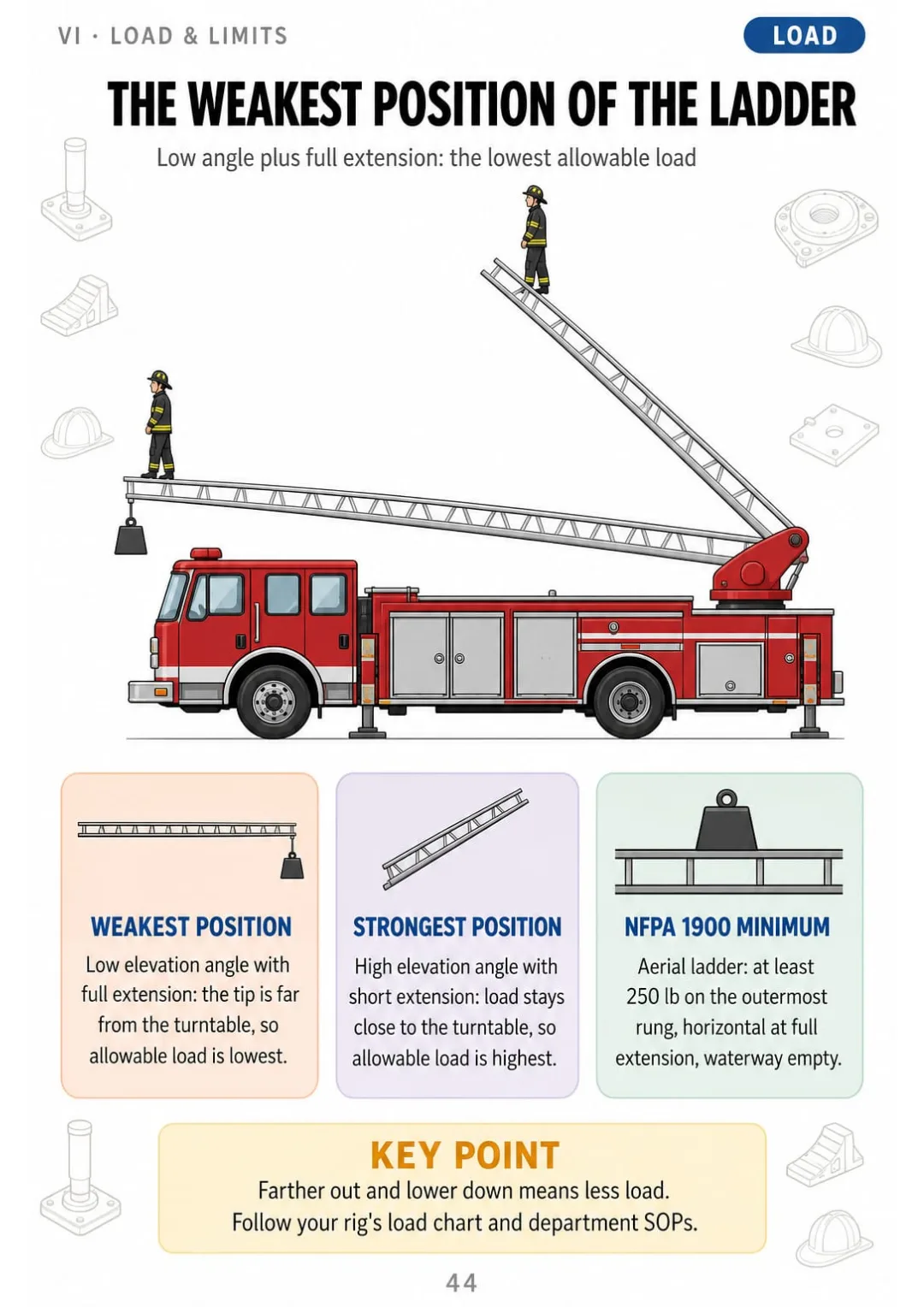
Low angle + full extension = lowest allowable load; 250 lb minimum at the tip (NFPA 1900).
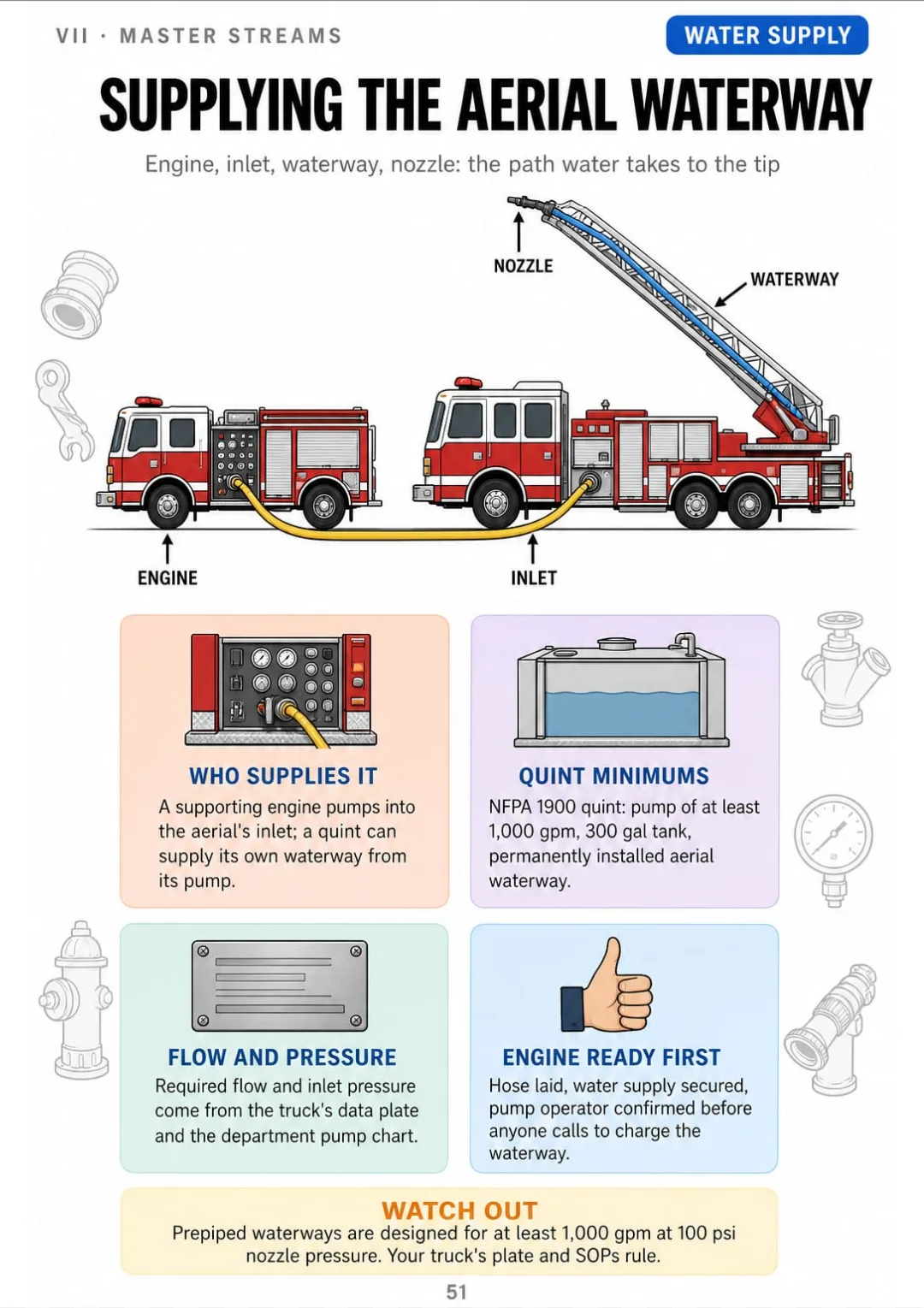
Engine → inlet → waterway → nozzle: flow and inlet pressure come from the truck's plate
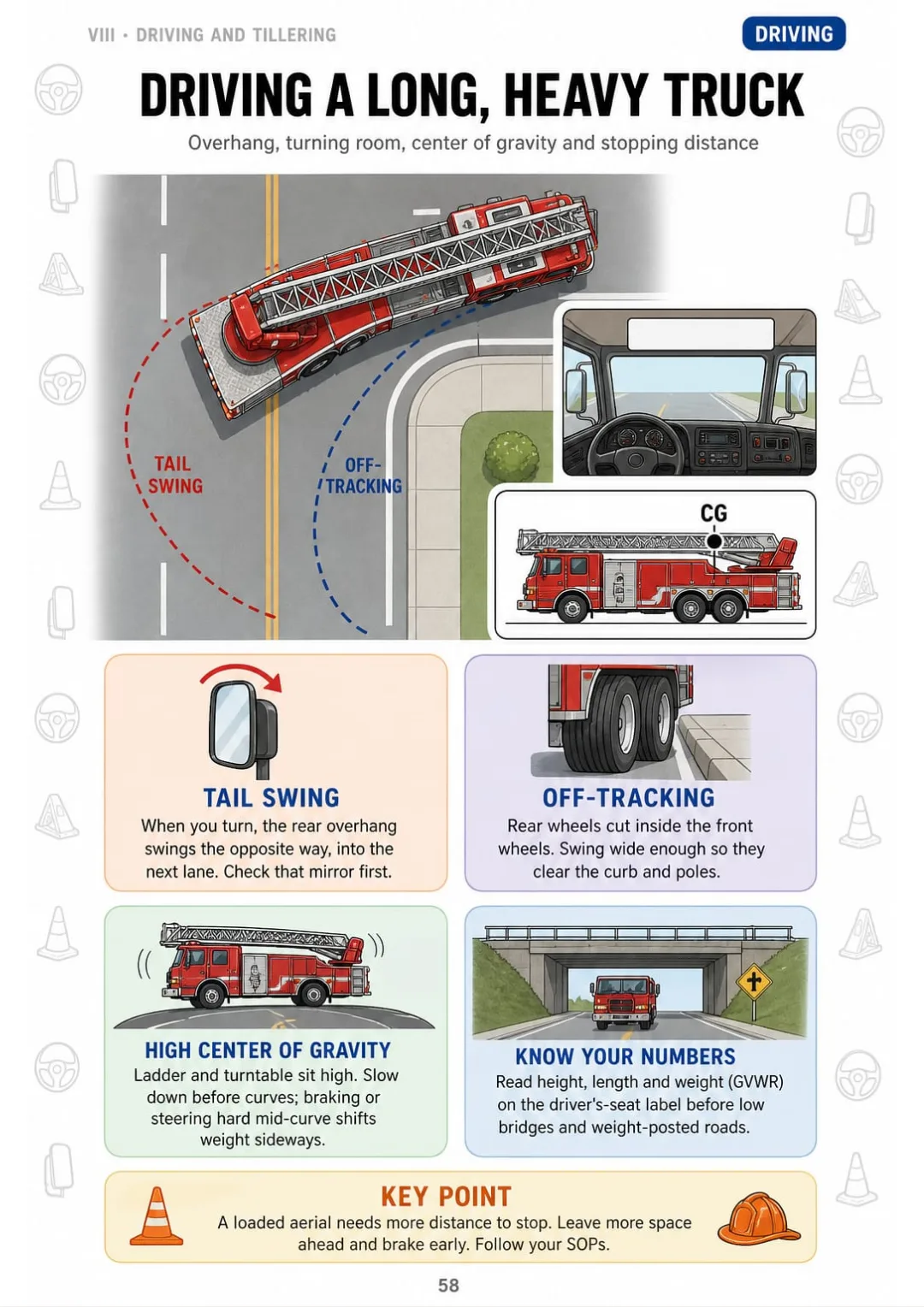
Tail swing, off-tracking, high center of gravity and the cab placard, on one page.

Swipe to see more →

These are real pages from the book. The table of contents is the full one: 9 parts and 65 topics.

The Problem Isn't You. It's How It Was Explained to You.

You pull up on the fire, the captain says "aerial on the corner," and you have seconds to decide where to stop the truck.

Your manual covers spotting in pages of paragraphs: the objective, the reach, the ground and the wires, all mixed into one long chapter. Under pressure, paragraphs don't come back in order.

Objective, reach, ground, overhead: the 4 questions to ask before you stop the truck.

In this book, spotting is one page: the truck seen from above at the building, with the 4 questions to ask before you stop: objective, reach, ground, overhead.

Every other topic works the same way: the collapse zone, power line clearance (10 feet up to 50 kV, more above), the order the jacks go down, the weakest position of the ladder, driver–tillerman signals.

You understand it, and on the apron you spot the truck without going back to the manual.

COMPARE FOR YOURSELF

The Same Topic, Two Ways to Study It

THIS
  • The manual: line after line of text
  • Aerial positions explained only in words
  • You walk into the exam with doubts
The rear-mount aerial ladder is characterized by the placement of the turntable assembly over or immediately forward of the rear axle of the apparatus chassis, with the fly sections of the ladder, when in the bedded position, extending forward over the cab and frequently beyond the front bumper, thereby producing an overhang that must be considered by the driver/operator during apparatus positioning, and with the effective horizontal reach of the device being measured from the centerline of the turntable rather than from any point on the apparatus body.
FOR THIS
  • The rear-mount aerial in one drawing
  • Reach and overhang in a box
  • You see it and you get it
Turntable over the rear axle, overhang past the bumper: reach is measured from the turntable.
CONTENTS

Take a Look at the 9 Parts and 65 Topics

The job and the standard, types of aerials, spotting, stabilizing, raise-rotate-extend, load and limits, elevated master streams, driving and tillering, and inspection and review: 69 pages, all illustrated.

IThe Job and the Standard · pp. 5-10
  1. What an Aerial Operator Is Certified to Do
  2. NFPA 1002 Became NFPA 1010: What Changed
  3. Written, Practical, Oral: How You're Tested
  4. Manufacturer, SOP, Standard: Which One Wins
  5. The 7-Step Aerial Method
  6. Key Terms on One Page
IITypes of Aerial Apparatus · pp. 11-17
  1. Rear-Mount Aerial Ladder
  2. Mid-Mount Aerial Ladder
  3. Tractor-Drawn Aerial (Tiller)
  4. Aerial Platform and Tower Ladder
  5. Articulating and Telescoping Platforms
  6. Quints and Water Towers
  7. Rated Load: Ladder vs. Platform
IIISpotting the Truck · pp. 18-26
  1. Spotting Comes Before Everything
  2. The Corner Position
  3. Scrub Area: Measuring What You Can Reach
  4. Collapse Zone: 1.5 Times the Wall Height
  5. Power Lines: The 10-Foot Minimum
  6. Ground That Holds: Soft Surfaces and Hidden Voids
  7. Spotting on a Slope
  8. Rescue Spot vs. Fire-Attack Spot
  9. Working with the Engine and Other Trucks
IVStabilizing · pp. 27-34
  1. Before the Jacks: Brake, Chocks, PTO
  2. Stabilizer Types: A-Frame, H-Style, Out-and-Down
  3. The Order the Jacks Go Down
  4. Jack Pads and Cribbing
  5. Leveling the Truck
  6. Short-Jacking: When Space Runs Out
  7. Interlocks: What Stops You and Why
  8. The Stabilizer Walk-Around
VRaise, Rotate, Extend · pp. 35-43
  1. Raise Before You Rotate
  2. Rotating Without Hitting Anything
  3. Extending: Watch the Rungs
  4. Lowering Onto the Target
  5. Tip Placement for Roof Access
  6. Tip Placement for Window Rescue
  7. Moving Smoothly: Feathering the Controls
  8. Communicating with the Tip
  9. Emergency Operation: Manual Override and Auxiliary Pump
VILoad, Forces and Limits · pp. 44-50
  1. The Weakest Position of the Ladder
  2. Reading a Load Chart
  3. Water Flowing Cuts Your Load
  4. Wind and Ice
  5. Side Loading and Torsion
  6. Dynamic Loads: Jumping, Bouncing, Shock
  7. Using the Aerial as a Crane: Why Not
VIIElevated Master Streams and Fireground Tasks · pp. 51-57
  1. Supplying the Aerial Waterway
  2. Pressure to the Tip: Elevation Loss
  3. Charging and Shutting Down Slowly
  4. Nozzle Reaction and Stream Direction
  5. Defensive Stream Placement
  6. Ventilation from the Aerial
  7. Rescue from the Aerial: Order of Operations
VIIIDriving and Tillering · pp. 58-63
  1. Driving a Long, Heavy Truck
  2. Intersections and Emergency Driving
  3. Backing with a Spotter
  4. The Tillerman's Job
  5. Driver–Tillerman Signals
  6. Tight Streets and Jackknifing
IXInspection, Testing and Review · pp. 64-69
  1. Daily and Weekly Aerial Check
  2. Annual and 5-Year Testing
  3. Stowing: The Reverse Order
  4. Practical Exam Run-Through
  5. The Numbers to Know Cold
  6. Most Frequent Setup Mistakes

One Page, One Topic, All Clear

Think of it this way:

It's the practical exam. The evaluator points at the truck and says: stabilize it. Brake, gear, chocks, PTO, then the jacks: you need the order right now.

In the book you open the stabilizing pages and see the truck from above, every step numbered, with the jack pads and cribbing drawn right under it.

Raise → rotate → extend: what you hit if you rotate a bedded ladder

Same with the corner position, the collapse zone, the weakest position of the ladder, elevation loss to the tip and driver–tillerman signals: each one on its own page.

Aerial Apparatus Operator Illustrated is 9 parts and 65 topics, all drawn, and it ends with a practical exam run-through, the numbers to know cold and the most frequent setup mistakes.

What you see drawn, you don't have to memorize.

What's Inside Aerial Apparatus Operator Illustrated:

Ipp. 5-10

The Job and the Standard

What an aerial operator is certified to do, NFPA 1002 becoming NFPA 1010, how you're tested, which rule wins and the 7-step method.

IIpp. 11-17

Types of Aerial Apparatus

Rear-mount, mid-mount and tiller aerials, platforms and tower ladders, articulating units, quints and rated load, ladder vs. platform.

IIIpp. 18-26

Spotting the Truck

Why spotting comes first, the corner position, scrub area, collapse zone, power lines, soft ground, slopes and rescue vs. fire-attack spots.

IVpp. 27-34

Stabilizing

Brake, chocks and PTO, stabilizer types, the order the jacks go down, pads and cribbing, leveling, short-jacking and interlocks.

Vpp. 35-43

Raise, Rotate, Extend

Raise before you rotate, extending, lowering onto the target, tip placement for roofs and windows, feathering the controls and emergency operation.

VIpp. 44-50

Load, Forces and Limits

The weakest position, reading a load chart, water flow, wind and ice, side loading, dynamic loads and why the aerial is not a crane.

VIIpp. 51-57

Elevated Master Streams and Fireground Tasks

Supplying the waterway, elevation loss, charging and shutting down slowly, nozzle reaction, defensive streams, ventilation and rescue.

VIIIpp. 58-63

Driving and Tillering

Driving a long, heavy truck, intersections, backing with a spotter, the tillerman's job, driver–tillerman signals and tight streets.

IXpp. 64-69

Inspection, Testing and Review

Daily and annual checks, 5-year testing, stowing in reverse order, a practical exam run-through, the numbers to know and the most frequent mistakes.

At the end of the book: A practical exam run-through, the numbers to know cold and the most frequent setup mistakes.
Plus: 2 Free Books

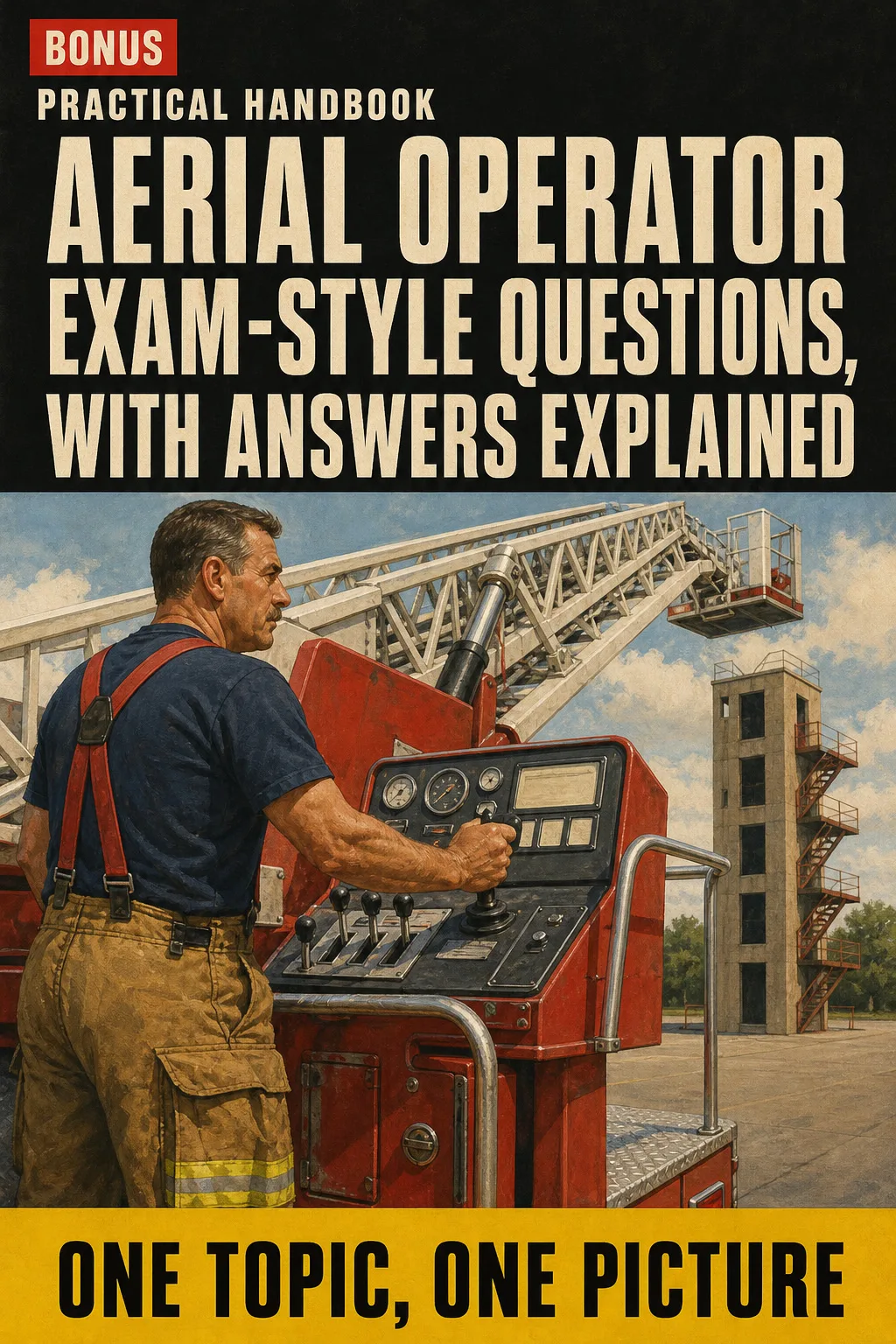
Aerial Operator Exam-Style Questions, with Answers Explained

BONUS 1: «Aerial Operator Exam-Style Questions, with Answers Explained»

Value on its own: US$ 17.90

Practice with exam-style questions on positioning, stabilizers, load and tiller, and see why each answer is right, so the real test feels familiar.

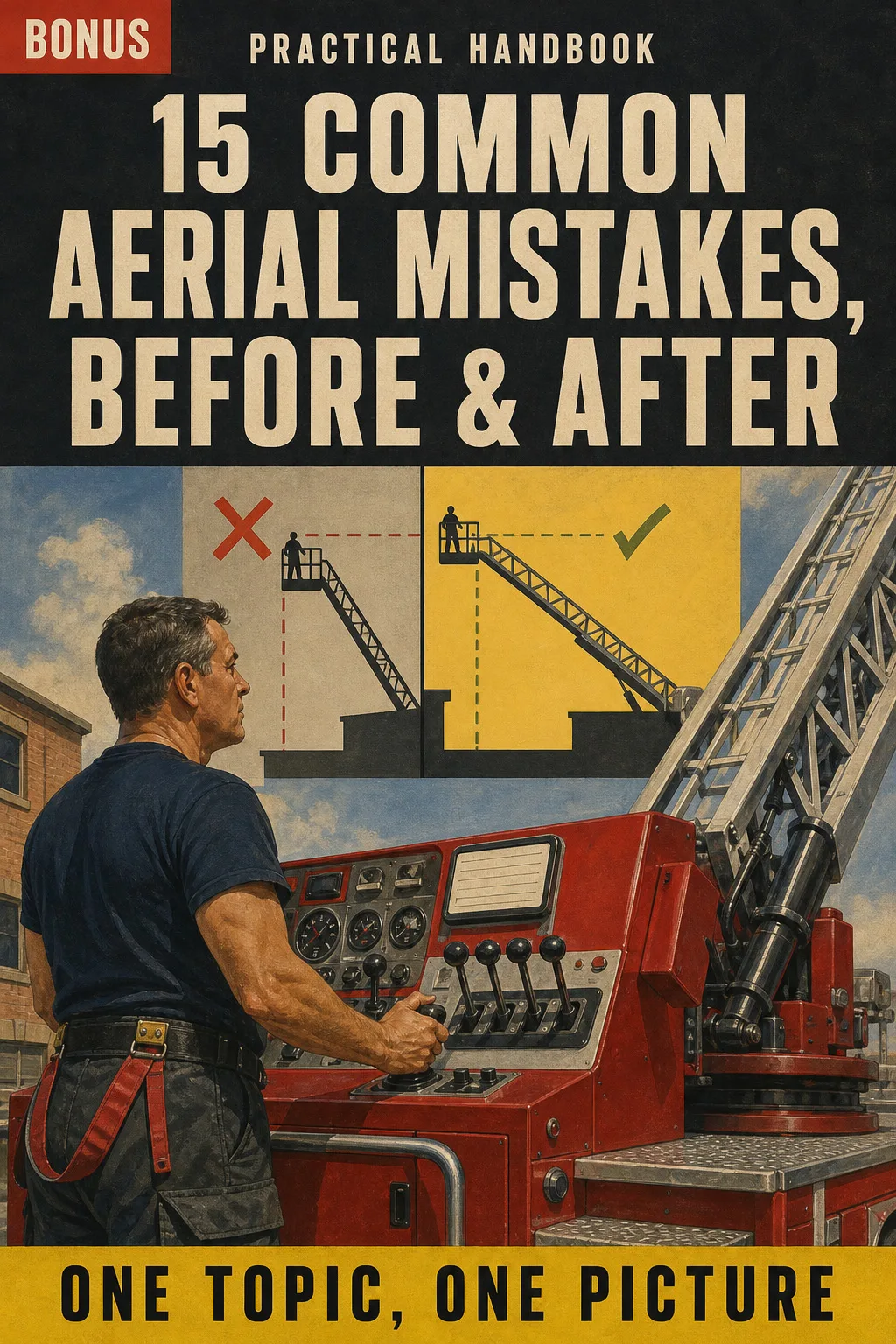
15 Common Aerial Mistakes, Before & After

BONUS 2: «15 Common Aerial Mistakes, Before & After»

Value on its own: US$ 14.90

The most frequent setup and operating errors, each drawn wrong and then right, to review the night before the exam or the drill.

Aerial Apparatus Operator Illustrated with 2 Free Books

  • Aerial Apparatus Operator Illustrated: 69 illustrated pagesUS$ 63
  • BONUS 1: Aerial Operator Exam-Style Questions, with Answers ExplainedUS$ 17.90
  • BONUS 2: 15 Common Aerial Mistakes, Before & AfterUS$ 14.90
  • High-resolution PDF to printIncluded
Total value US$ 95.80
YOUR PRICE:
US$ 27
You save US$ 68.80
YES, I WANT AERIAL APPARATUS OPERATOR ILLUSTRATED FOR US$ 27

📄 This is a digital PDF book sent to your email: nothing is printed or shipped.

Secure purchaseEncrypted payment30-day guarantee

PDF by email: We email you Aerial Apparatus Operator Illustrated as a PDF, together with the two free books. It's a single payment: no installments, no extra charges.

Who This Book Is For

You're studying for aerial operator certification

You're studying for aerial operator certification

Each topic on its own page, in the order you set up the truck, so a short read on shift actually stays with you.

Your engineer promotional exam is coming up

Your engineer promotional exam is coming up

The 7-step method, the numbers to know cold and exam-style questions to review in the weeks before the test.

You already run the aerial or train the crew

You already run the aerial or train the crew

Pages to print for the cab or for drills: spotting, jacks, load limits and tiller signals at a glance.

Everything You Get Today

US$ 95.80US$ 27
YES, I WANT AERIAL APPARATUS OPERATOR ILLUSTRATED FOR US$ 27

📄 This is a digital PDF book sent to your email: nothing is printed or shipped.

30DAYS
GUARANTEE

30-Day Guarantee

Try Aerial Apparatus Operator Illustrated for 30 days, bonus books included.

We refund everything if the file won't open, if the book isn't what you see here, if you were charged twice or if the email doesn't arrive. Just email us.

You pay once. No subscriptions.

Frequently Asked Questions

Is it for me if I've been driving the truck for years?

Yes. It isn't a beginner's book: it puts what you already do in the same order every time, with each topic drawn, so you can review it fast before the exam or a drill.

Where does the content come from?

From the current standards: NFPA 1010, which replaced NFPA 1002 for driver/operator requirements; NFPA 1900, which replaced NFPA 1901, for aerial device design; NFPA 1910, which replaced NFPA 1911, for inspection and testing; and OSHA 29 CFR 1910.333 for power line clearance. Every page reminds you to follow the manufacturer's load chart and your department's SOPs.

Is it official material?

No. It's an independent study book. It isn't published or endorsed by NFPA, IFSTA, OSHA or any fire department, and it doesn't give you a certificate or training hours. Your certification comes from your department or state.

Does it replace my academy course or department training?

No. It works alongside whatever your department uses, IFSTA or Jones & Bartlett: it follows the same NFPA requirements, drawn one topic per page. Hands-on training, your rig's manual and load chart, and your department's SOPs always come first.

Are the practice questions the ones on the exam?

No. They're written for this book in the style of the exam, to practice. They are not official exam questions.

When and how do I get it?

The book and the 2 bonus books come as PDFs by email.

Does it work for my state's or department's exam?

It follows NFPA 1010, the national professional qualifications standard for driver/operators. Your state or department may add its own SOPs and reading list, so compare them with the index on this page. It's a one-time payment.

Can I have it on paper?

Yes. It's a PDF ready to print, so you can keep the pages you need in your locker or in the cab.

How does the refund work?

You have 30 days. We refund everything if the file won't open, if the book isn't what you see on this page, if you were charged twice or if the email doesn't arrive: just email us.

Before You Close This Page

No more rereading the chapter with nothing sticking.

Spotting, jacks and the weakest position: you see them drawn, and that's it.

You walk into the exam knowing where everything is.

Drawings make studying faster.

The book is right below.

One-time payment: US$ 27 · Guarantee: 30 days · PDF by email

YES, I WANT AERIAL APPARATUS OPERATOR ILLUSTRATED FOR US$ 27

📄 This is a digital PDF book sent to your email: nothing is printed or shipped.